
How to Buy Cotton Bed Sheets: A Buyer's Guide
Buying cotton bed sheets should be simple. It isn’t, mostly because the category is full of numbers and terms that sound meaningful but aren’t, and marketing that has trained people to look for the wrong things.
This guide cuts through it. Here’s what actually determines whether a sheet is good, what to look for, and what to ignore.
Ignore thread count (mostly)
Thread count is the number of threads woven into a given area of fabric - and it's the number most people use to judge sheet quality. It's also the most misused figure in the category. It's worth knowing that Australia and the rest of the world measure it differently: while Australia counts per 10 square centimetres, elsewhere it's more common to use figures per square inch, which produces a slightly higher number for the same fabric. A sheet quoted at 200 thread count in Australia would be around 250 in the US. So comparing thread counts across brands isn't always apples to apples - and that's before you get to the more significant problem of multi-ply inflation, which we'll come to shortly.
Up to a point, thread count reflects quality: a well-made percale sheet typically sits between 200 and 400, which is appropriate for the weave and the yarn used. Beyond that, the numbers become what you might call creative accounting. The extra numbers come from multi-ply yarn: twist two or three threads together, count each strand individually, and you can triple your thread count on paper without changing the fabric at all. The resulting sheet isn't finer or stronger - it's thicker, less breathable, and often less durable than an honest 300-count sheet made from good single-ply yarn. Textile research suggests that once cotton sheets reach around 400-500 thread count, further increases offer minimal real-world benefit - beyond this range, you’re often paying for a higher number rather than a better fabric.
An inflated thread count is frequently a sign of lower-quality cotton being used, not higher. The long-staple, fine-fibre cotton that makes genuinely good fabric is naturally suited to moderate thread counts. Cheap, short-staple cotton needs to be twisted into multi-ply yarns to achieve adequate strength - and thread counts are inflated accordingly, which adds little to (and often detracts from) quality, but looks good in marketing materials.
Fibre quality is what actually matters
The quality of cotton varies significantly depending on the length of the fibre (called the staple), and staple length is the most important single factor in sheet quality.
Short-staple cotton produces yarn with many fibre ends protruding from the surface. This makes the fabric feel coarser, pill more readily, and degrade faster with washing. It’s cheap to produce and common in budget sheets.
Long-staple cotton - where fibres are generally considered to begin around 25–28mm - can be spun into finer, stronger, more consistent yarn. The fabric is smoother, more durable, and improves with washing rather than deteriorating. Egyptian cotton is often cited as a long-staple variety, though the name alone is not a guarantee of quality (more on this below).
Extra-long staple cotton (typically 35mm or longer, including genuine Pima and Supima) takes this further - finer yarn, stronger fabric, longer-lasting.
The processing of the fibre also matters:
Combed cotton has been processed to remove short fibres and impurities, producing more consistent yarn and a cleaner, smoother fabric. Better than uncombed.
Compact-spun yarn removes air pockets from within the yarn structure during the spinning process, producing a finer, denser thread with better strength and less pilling tendency. Often unmarked on packaging but associated with quality-focused manufacturers. Our sheets use a combination of combed and compact cotton - which contributes to both the smooth hand feel and the durability you notice after years of washing.
Single-ply yarn uses one thread rather than two or three twisted together. It’s stronger for its weight, more breathable, and a reliable indicator of quality manufacturing. Multi-ply yarn is used to artificially boost thread counts and compensate for lower-quality fibre - not a good sign.
Weave: percale vs sateen
Once you’ve established the fibre quality, weave is the next meaningful choice. It determines how the sheet feels against your skin, how it sleeps, and how it ages.
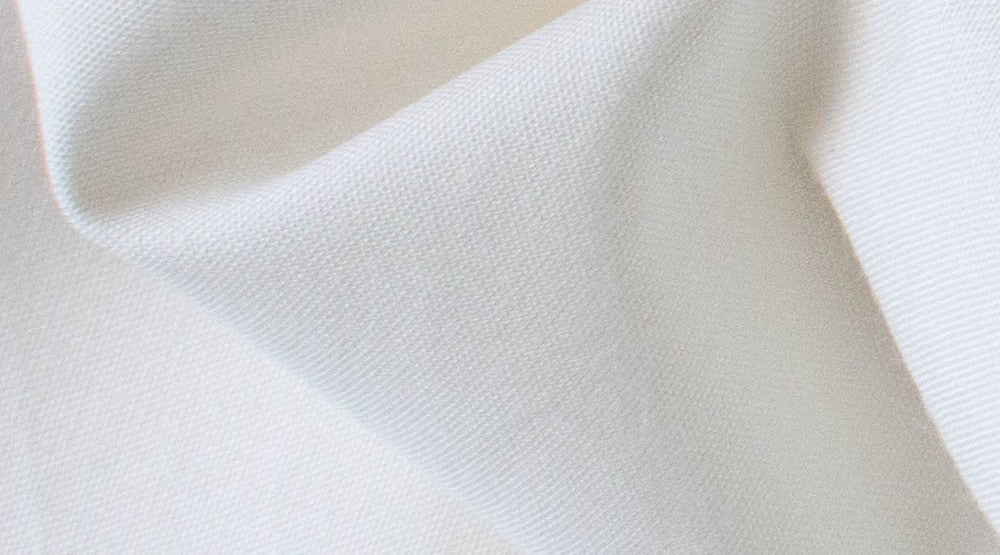
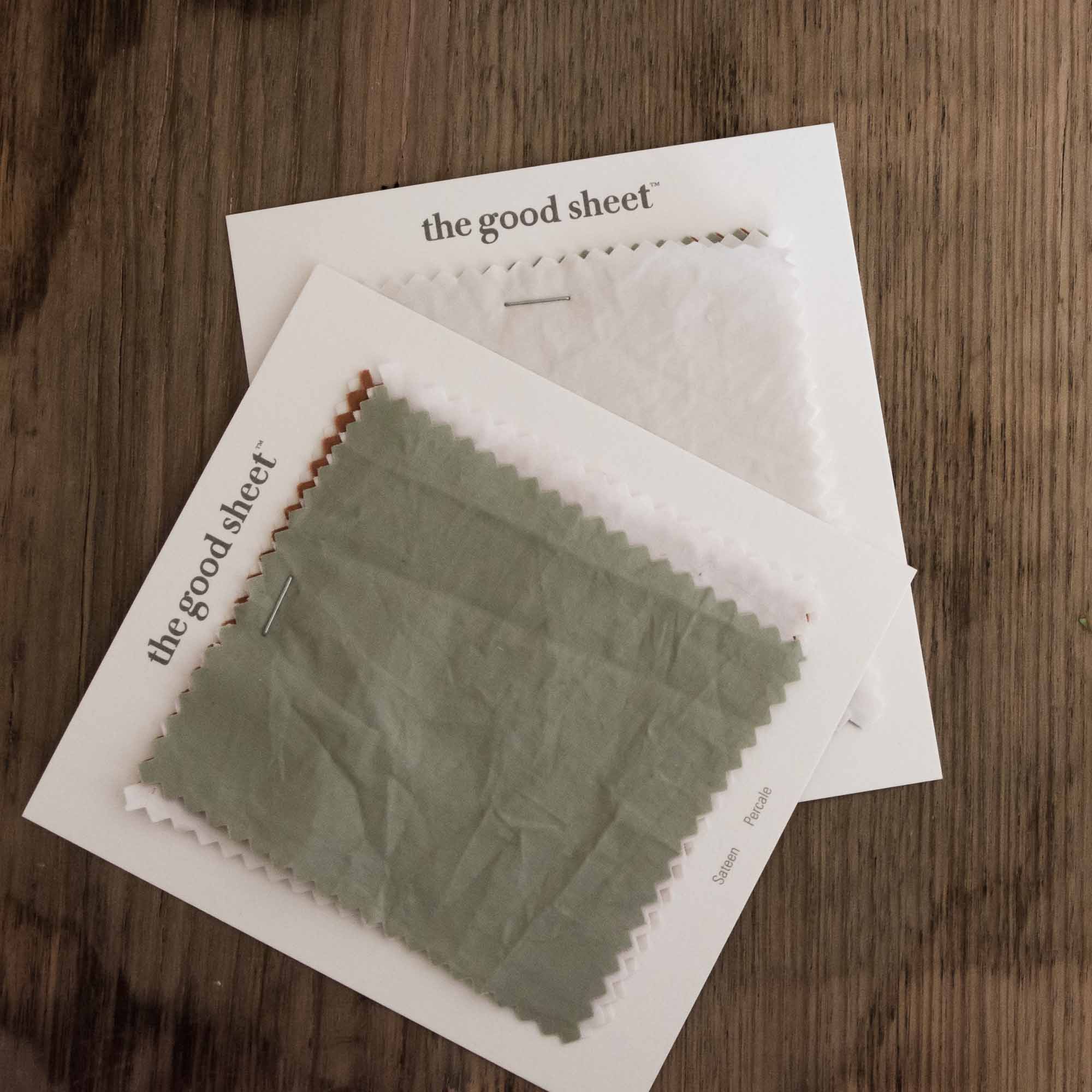
Percale uses a one-over, one-under plain weave - the same simple structure used for centuries. It produces a matte, crisp, cool fabric with a light, breathable feel. Percale is what you’ll find in most good hotels. It starts with a firm hand and softens with washing, improving over time. It wrinkles - that’s normal and not a defect; it’s a property of the weave. Percale should have a thread count of at least 180, and good quality versions typically reach up to about 400-500 threads per square inch.
Sateen uses a three-over, one-under weave that exposes more yarn to the surface. This produces a smoother, slightly lustrous finish and a warmer, drapier feel. Sateen wrinkles less but is slightly less durable, more prone to snagging, and less breathable than percale. Worth noting: the sheen on many sateen sheets is chemically enhanced during finishing and fades with washing. It also retains more body heat, which makes it better suited to cold climates and cold sleepers, and less suited to hot ones.
Neither weave is inherently superior - it comes down to how you sleep. If you run warm, prefer a crisp feel, or live in a warmer climate, percale is the better choice. If you sleep cold and prefer a silky, smooth feel, sateen suits you better.
What to look out for on the label
“100% cotton” - necessary but not sufficient. This tells you there’s no polyester in the fabric, which matters. It tells you nothing about the quality of the cotton.
"Cotton rich" - typically means at least 60% cotton, with the remainder polyester. Polyester is a synthetic plastic fibre. It may feel soft initially but tends to trap heat, pills more readily, and doesn't age the way cotton does. Not what most people are looking for when they buy cotton sheets.
“Egyptian cotton” - the name refers to cotton grown in Egypt, which can be long-staple, but the label has been widely misappropriated. Studies have found a significant proportion of sheets labelled Egyptian cotton to contain no Egyptian cotton at all, or to use short-staple Egyptian cotton that doesn’t deliver the quality the name implies. Look for specific fibre certifications rather than origin claims alone.
"Percale" - should mean a plain one-over, one-under weave with a thread count of at least 180. It's sometimes used loosely on sheets that don't meet that threshold, or on fabrics that aren't a true plain weave. If a sheet is labelled percale but doesn't specify thread count or fibre quality, treat it with some scepticism.
"1000 thread count" - almost certainly multi-ply, meaning the actual thread count is a fraction of what's advertised. Independent testing by AWTA Product Testing found some sheets sold in Australia at 1,000 thread count had real counts of below 300 - less than a third of the claim. The fabric itself is typically thick and dense with an initially smooth, heavy feel that some people genuinely prefer, but it's a very different product to a well-made moderate thread count percale - not a superior version of the same thing. Treat any thread count above 600 as a yellow flag rather than a quality signal.
"Luxury" / "hotel quality" - these terms are unregulated and mean nothing on their own. A sheet can legally be called luxury regardless of what's in it. Look for the specifics that would actually justify the claim: fibre type, thread count, weave, certifications. If those aren't listed, the word luxury is doing nothing except justifying a higher price.
OEKO-TEX Standard 100 - certifies that the fabric has been tested for harmful substances, including pesticide residues, heavy metals, and chemical finishes. It doesn’t certify organic farming practices but does confirm the finished product is safe against skin. Worth looking for especially if you have skin sensitivities.
GOTS (Global Organic Textile Standard) - certifies organic fibre production through to manufacturing. More comprehensive than OEKO-TEX in terms of the supply chain, and can apply at different levels - the raw material, the fabric, or the finished product. Our products are certified at the finished goods level, meaning the organic cotton and the entire manufacturing process meet the standard. Both certifications require independent audit and renewal, which makes them more trustworthy than self-declared claims.
Construction details that matter more than most people think
The fabric is the most important thing, but construction affects how a sheet performs over time.
Elastic and construction on fitted sheets - wide, thick elastic that runs fully around the sheet (not just at the corners) grips a mattress properly and doesn't stretch out after repeated washing. Thin, narrow elastic is the most common failure point in budget sheets and the most obvious construction shortcut. Deep walls matter too - sheets sized for standard mattress depths often won't fit mattresses with pillow tops or deep bases. It's also worth looking at how the corners are finished: our fitted sheets use French seams, which enclose the raw edges inside the seam rather than leaving them overlocked. No fraying, a cleaner finish, and a join that holds up to years of washing in a way that a standard overlocked edge doesn't.
Flat sheet sizing - a flat sheet that’s generously sized can actually be tucked in and will stay there. Standard sizing on many cheap sets is cut close to minimum dimensions.
Pillowcase depth - a deep envelope closure keeps the pillow inside rather than letting it pop out during the night. A shallow flap is a minor annoyance that better manufacturers avoid.
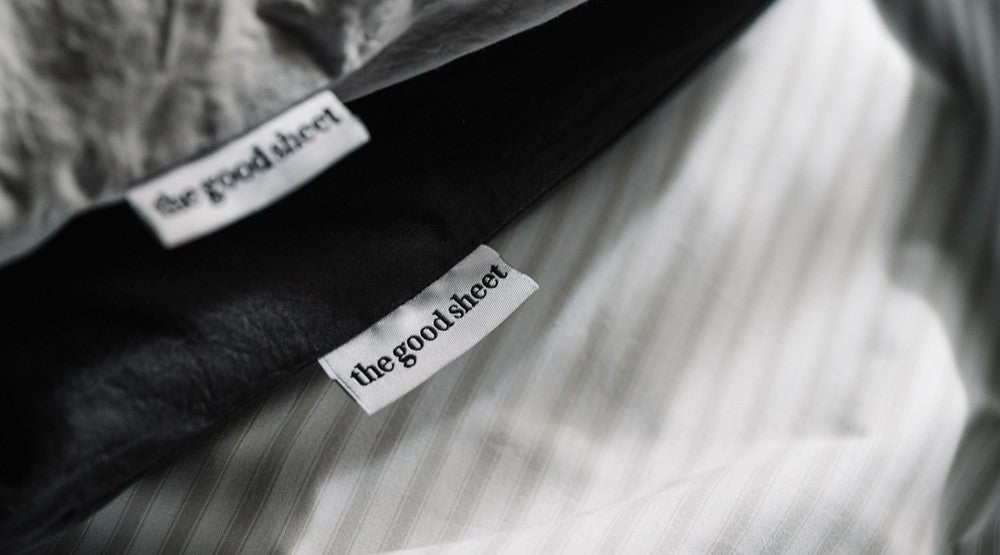
Labels - woven labels don’t fade or crack. Printed labels often do, and on dark sheets particularly this becomes noticeable quickly. A small detail, but one that separates manufacturers who think about the product from those who don’t.
A note on thickness
There’s a common belief that a heavier sheet is a better sheet. It’s understandable - weight feels substantial and suggests quality - but it’s not quite right.
GSM (g/m2 or grams per square metre) measures fabric weight. It’s one variable among several, not a direct measure of quality. A very fine, high thread count sheet might be 120gsm and be excellent. A low thread count, rough-yarn sheet might be 200gsm and be unpleasant. Thickness reflects the yarn weight and weave structure; it doesn’t on its own tell you whether the fabric is well-made.
What you want is a fabric where the weight reflects deliberate choices about the balance between comfort, breathability, and durability - not just bulk for its own sake. Very thin sheets made from fine yarn at high thread count can be genuinely luxurious but sacrifice some longevity. Very thick, low thread count sheets like the old muslin-weave sheets will be durable but can feel rough. Most quality sheets sit somewhere in between, with the specific GSM a consequence of how the manufacturer has balanced those competing factors.
Our sheets are 155gsm - a choice that reflects what we wanted: a fabric with genuine weight and substance that still breathes well and softens beautifully with use, the way they used to be. The industry has largely moved in the opposite direction over the decades - finer yarns, higher thread counts, lighter fabrics - chasing a certain kind of smoothness at the expense of the weight and durability that older sheets had. We made a deliberate choice to go back to that. So our particular GSM number isn't a magic figure; it's what came out of our choices about yarn, weave, and construction. A different manufacturer making equally good percale sheets might land somewhat lighter - a different balance of priorities. GSM is worth knowing but it's context-dependent, not a standalone quality benchmark.
The short version
Look for: 100% cotton, long-staple or extra-long staple fibre, single-ply yarn, a thread count appropriate to the weave (180–400 for percale), OEKO-TEX or GOTS certification, deep-walled fitted sheets with proper elastic, and honest sizing. Ask for GSM (grams per square metre) if this is important to you, sheets at around 100 GSM will be very light, ours are 155 GSM which is heavy for percale, and there will be plenty which are heavier, but at that weight you're unlikely to be looking at a percale fabric.
Be sceptical of: Thread counts above 600, "Egyptian cotton" without certification, and any sheet with a suspiciously low price that claims premium credentials.
Choose your weave based on how you sleep: percale for cool, crisp, and breathable; sateen for warm, smooth, and draped.
Everything else - the packaging, the brand story, the photography - is noise. The fabric is what you’re actually sleeping on.
Now you know what to look for - shop our Heavyweight Percale Bedding.